


Ordering from France after Brexit can feel confusing. Will your parcel get stuck in customs, how much tax will you pay, and which carrier is actually reliable from France to the UK? If you are searching how to ship France to UK without surprises, you are not alone. Every week more UK buyers discover French brands and marketplaces while worrying about paperwork and extra fees. In this guide we walk through the main options and how to make them work in your favour.
Shipping from France to UK: How to Ship France to UK with Royal Mail, DHL & Best Options
Reading time: ~9 min
- Summary
- Why shipping from France to the UK feels complex now
- Main ways to Ship France to UK
- When Royal Mail and La Poste make sense
- DHL and other express couriers for urgent France to UK parcels
- Customs, VAT and duties when shipping from France to the UK
- How AirSelli helps UK buyers order from France with less stress
- Practical tips to reduce delays and extra costs
- FAQ on shipping from France to the UK
- Bringing it all together
Why shipping from France to the UK feels complex now
From EU rules to a customs border
Before Brexit, parcels moved between France and the UK almost like domestic mail inside the European Union. Today the UK is treated as a separate customs territory. That means declarations, possible VAT and duties, and more checks at the border.
Common concerns for UK buyers
For UK buyers this often creates three kinds of anxiety. You may worry that the parcel will be delayed in customs, fear an unexpected bill from the carrier on delivery, or feel unsure whether you should choose a postal service, an express courier, or an intermediary.
The good news is that the rules are now clearer and the main carriers have adapted their services. Once you understand who does what between France and the UK, you can choose the option that matches your budget, your timing, and the value of what you buy.
Main ways to Ship France to UK
There are three broad ways to move a parcel from France to the UK, depending on who sends it and how urgent it is.
| Shipping method | Best for | Typical speed & tracking |
|---|---|---|
| Postal route (La Poste & Royal Mail) | Light, low-value, non-urgent items such as books or personal gifts | Economy to a few working days, with limited to full tracking depending on the product |
| Express couriers (DHL, FedEx, etc.) | Urgent, high-value or business-critical shipments and documents | Next business day on major routes, or a few days for economy express services |
| Brokers & parcel-forwarding platforms | Access to multiple carriers and shops that only deliver to France | Varies by chosen carrier and service level, usually with online tracking |
Postal route with La Poste and Royal Mail
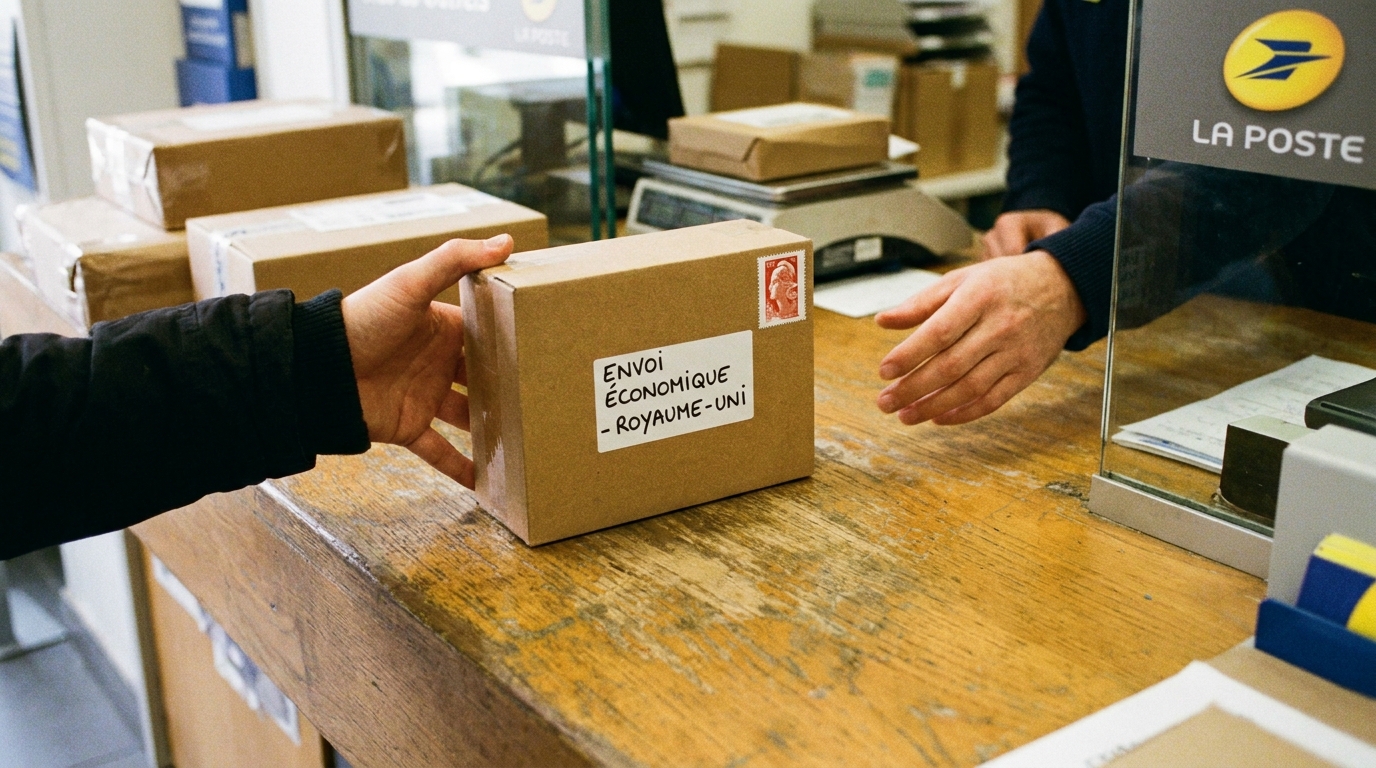
The sender in France hands the parcel to La Poste, which transports it across the border and passes it to Royal Mail in the UK. Royal Mail then completes the final delivery. Economy options with no tracking suit light, non-urgent items such as books or personal gifts, while faster tracked products aim for delivery within a few working days.
Express couriers such as DHL and FedEx
When speed, tracking and predictability matter more, integrators like DHL Express and FedEx run their own door-to-door networks and clear customs in-house. Next-day delivery is common for major cities, and slower economy options exist for less urgent parcels. These services fit higher-value goods or business documents where detailed tracking and delivery confirmation are essential.
Brokers and parcel forwarding platforms
Between the postal world and express integrators, shipping brokers let a French sender buy discounted labels from multiple carriers, while parcel-forwarding platforms such as AirSelli give UK buyers a local French address, receive parcels on their behalf and then reship internationally.
When Royal Mail and La Poste make sense
Postal solutions remain a solid, affordable choice for low-value, non-urgent items. Economy products focus on cost rather than speed, and faster postal options with tracking and signature on delivery are still often cheaper than express courier services of similar speed.
Limitations include stricter weight and size caps than couriers, slower claim handling, and in some cases partial tracking. Customs documentation is still required: the sender must attach a correct CN form or electronic equivalent. In short, choose postal services when the parcel is light, value is moderate, and you accept a slightly longer, less flexible delivery.
DHL and other express couriers for urgent France to UK parcels
DHL Express, FedEx and similar integrators specialise in speed and predictability, covering pickup in France to final delivery in the UK. Time-definite options can arrive next business day, with detailed tracking at every scan. The carrier manages customs clearance using documents supplied by the sender and offers convenient delivery choices such as rescheduling or leaving with a neighbour.
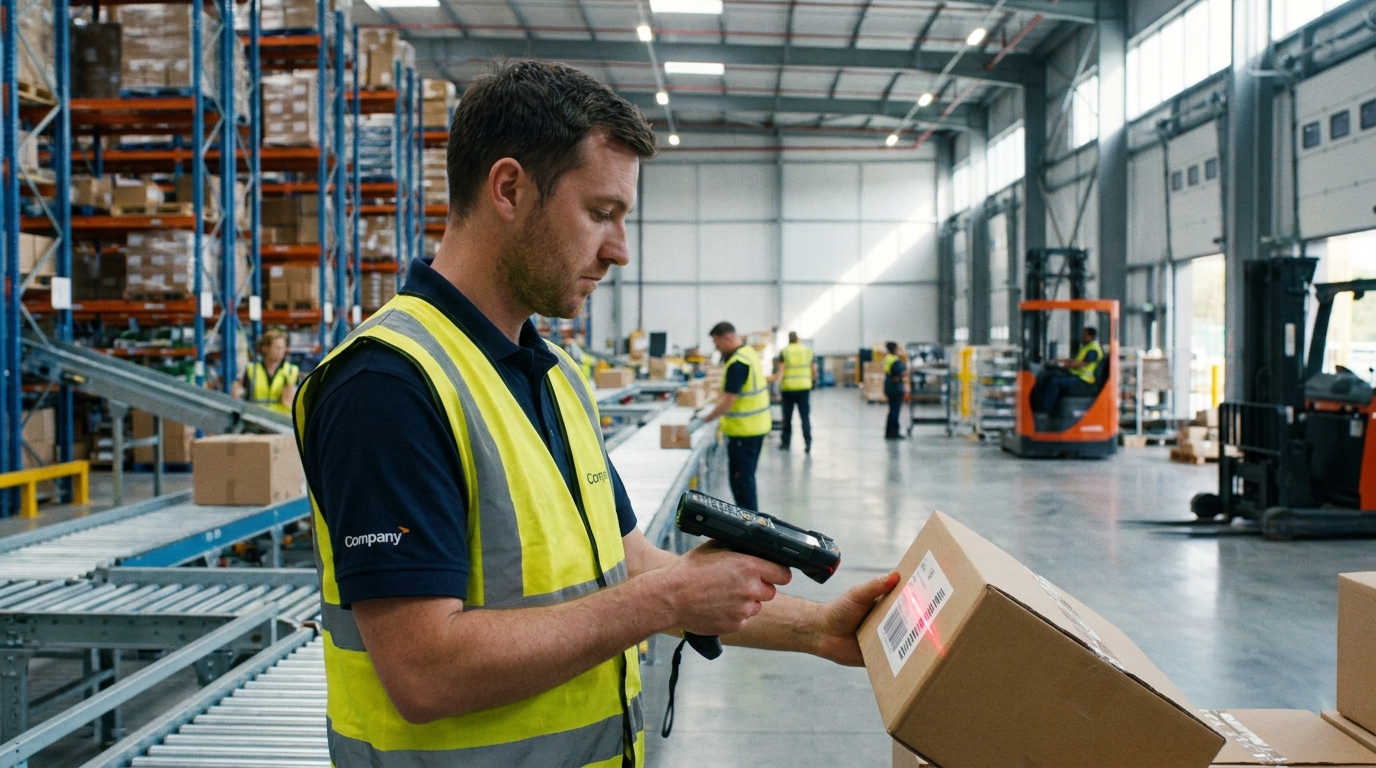
Pricing is higher than postal options, especially for heavy or bulky items, but the reduced risk of delay and clear tracking often justify the cost for time-sensitive or high-value shipments. DHL also sells economy-oriented parcel services via drop-off points that take a few days within Europe, sitting between classic post and premium express.
Customs, VAT and duties when shipping from France to the UK
Key customs rules for France–UK parcels
Post-Brexit, every parcel from France to the UK crosses a customs border. That does not mean every parcel pays high duty, but every shipment must be declared correctly.
The UK applies specific VAT and duty rules based on declared value. For low-value goods, VAT can often be collected at checkout by the seller or marketplace; for higher values, VAT and possibly customs duty are charged on import by the carrier. The sender must provide an accurate description, value, currency and country of origin, usually via a commercial invoice or customs form. Restricted items such as certain batteries, flammable liquids or some food products may need extra paperwork or are prohibited.
Avoiding delays and extra fees
If customs or VAT are not handled correctly, the parcel can be delayed and the carrier may request payment that includes tax and a handling fee. Using sellers or forwarding platforms familiar with UK rules helps avoid these surprises. For an estimate on shipping costs, try the shipping calculator.
How AirSelli helps UK buyers order from France with less stress
AirSelli does not operate planes or trucks; instead, it provides a secure French address, value-added services and reshipping via trusted carriers. UK buyers can order from shops that only deliver to France, have parcels received at a dedicated address, consolidate multiple purchases into one reshipment, and benefit from clear labelling and documentation prepared by AirSelli.
Because the team works daily on France-to-UK flows, they know common causes of delay and extra cost, help verify declarations, suggest suitable carriers, and offer tracking through a single interface. Learn more on the detailed page How AirSelli works or test scenarios with the online calculator.
Practical tips to reduce delays and extra costs
- Be precise about parcel contents and value; vague descriptions raise the chance of manual checks.
- Avoid restricted or fragile items when possible, or confirm in advance which carriers can handle them safely.
- For higher-value goods, choose tracked services and keep invoices or proof of payment in case customs asks for evidence.
- If you buy on a marketplace, check whether VAT is collected at checkout for UK delivery to prevent double taxation.
- When consolidating several orders through a platform like AirSelli, watch the combined customs value so you do not cross unexpected thresholds.
- For more information, see our contact page.
FAQ on shipping from France to the UK
Is it still worth ordering from France after Brexit?
Yes. Many UK buyers continue to order from French brands and marketplaces. The key is to understand that customs now applies and to factor in possible VAT and duty. With the right carrier and accurate documentation, deliveries usually move smoothly.
Which is better for France to UK parcels, Royal Mail or DHL?
There is no single winner. Postal services involving Royal Mail are often cheaper for light, low-value, non-urgent items. DHL Express and similar couriers are better for urgent, high-value or business-critical shipments where detailed tracking and predictable delivery times matter most.
How long does shipping from France to the UK usually take?
Economy postal services aim for several working days within Europe; tracked postal products can be slightly faster. Express services from carriers like DHL and FedEx can deliver as quickly as the next business day for many postcodes, and economy express options take a few days.
Can I avoid paying VAT or customs charges?
No legal way exists to avoid taxes when they are due. You can minimise surprises by choosing sellers or platforms that clearly state whether VAT is collected at checkout for UK deliveries and ensuring customs declarations are accurate.
How does a parcel forwarding service such as AirSelli fit into this?
A forwarding service gives you a French delivery address, receives your parcels, offers options such as consolidation or extra packing, and then reships internationally with partner carriers. This is especially useful when French merchants do not ship to the UK. To see all their global solutions, visit the AirSelli global shipping page.
Bringing it all together
Shipping from France to the UK has become more complex since Brexit, but it is far from impossible. By matching the right carrier type to your needs, understanding the basics of customs and VAT, and using smart intermediaries where they add value, you can keep access to French products without constant worry. To receive, consolidate and reship your French purchases to the UK with greater clarity and support, explore the international forwarding solutions on the AirSelli global shipping page.